KDUR Community Radio Data Platform
A Power Apps catalog and scheduling system designed with a community radio station for more than 60 daily users, plus embedding and graph-database prototypes — handed off before deployment.
- Replace fragmented music-library and scheduling workflows while reducing artist-name inconsistency that can affect search and royalty records.
- Stakeholder-informed application + applied-AI prototypes
- It adds product judgment and real stakeholder collaboration without inflating a handoff into a deployment claim.
Who did what
- Research assistant — application design, data modeling, embedding prototype, graph-database exploration, and handoff
- Dr. Matthew Welz, Fort Lewis College
- KDUR staff and intended users contributed workflow requirements and feedback.
- Microsoft Power Apps, vector-embedding services, Neo4j, and natural-language-to-Cypher tooling.
Overview
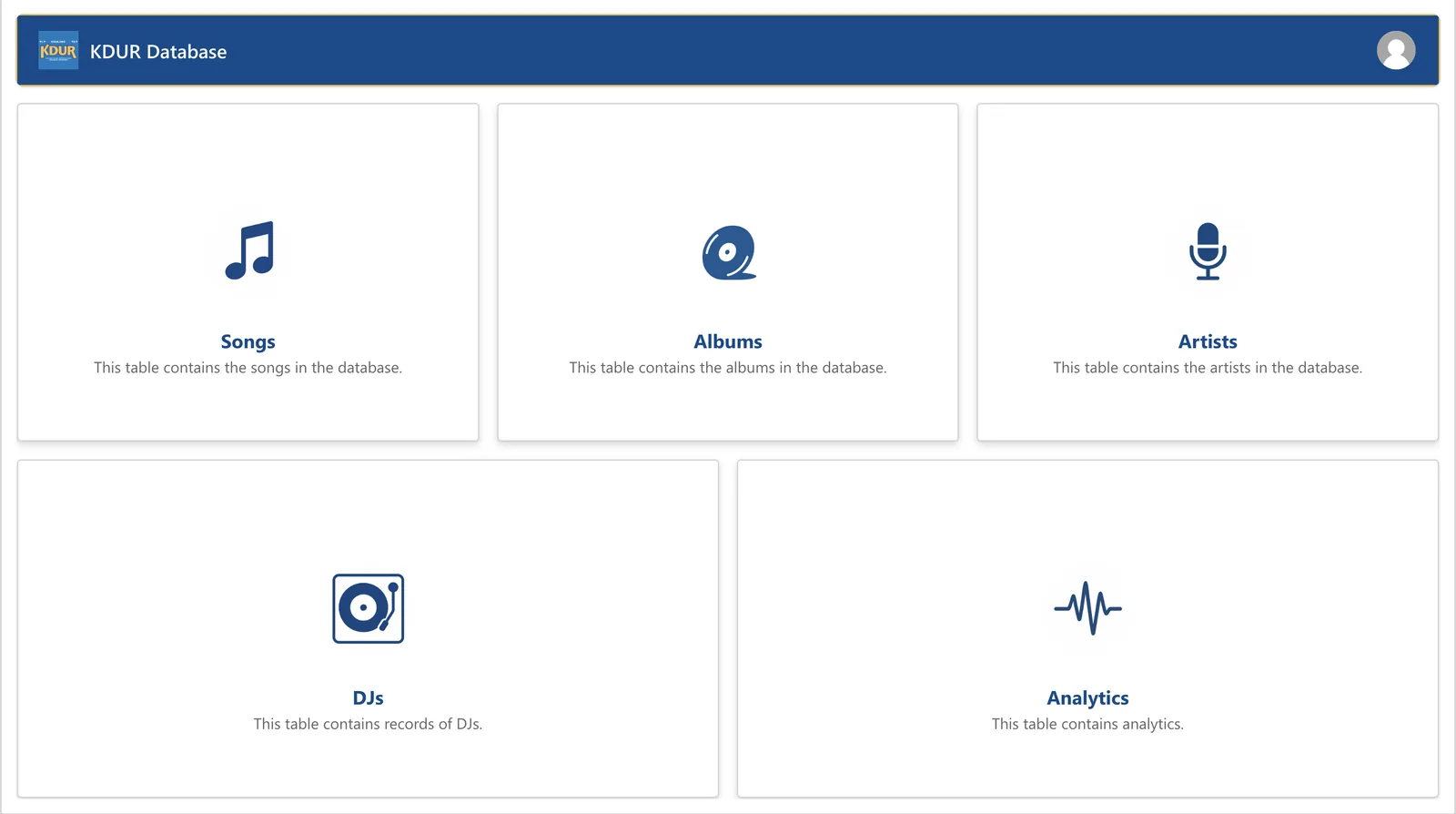
Working with Fort Lewis College's KDUR radio station, I designed and built a Power Apps data application for the music library and station workflows. The intended population was more than 60 daily DJs and staff members. I later explored an applied-AI layer: vector embeddings for artist-name normalization and a Neo4j prototype with natural-language-to-Cypher agents. When I moved full-time into robotics research, the application was handed off before deployment. The project therefore demonstrates user-centered data modeling, prototyping, and handoff — not verified production adoption.
Methodology
- Mapped stakeholder workflows into a structured catalog and scheduling model, then prototyped artist-name resolution with embeddings and relationship exploration in Neo4j.
- Kept the delivered application and later AI experiments distinct so prototype capabilities do not imply production adoption.
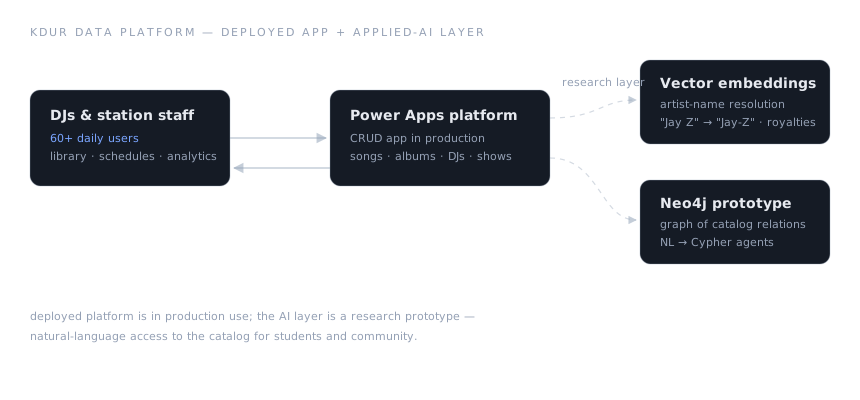
Station workflows feed a structured catalog application; separate experiments test whether embeddings can normalize artist names and whether graph queries can provide a more natural discovery interface.
- KDUR stakeholder workflows
- Power Apps catalog + schedules
- Structured station data
- Embedding name resolution
- Neo4j / NL-to-Cypher prototype
My contribution
- Mapped station entities and workflows into a relational Power Apps application for songs, albums, artists, locations, and schedules.
- Designed the interface around an intended population of more than 60 daily station users.
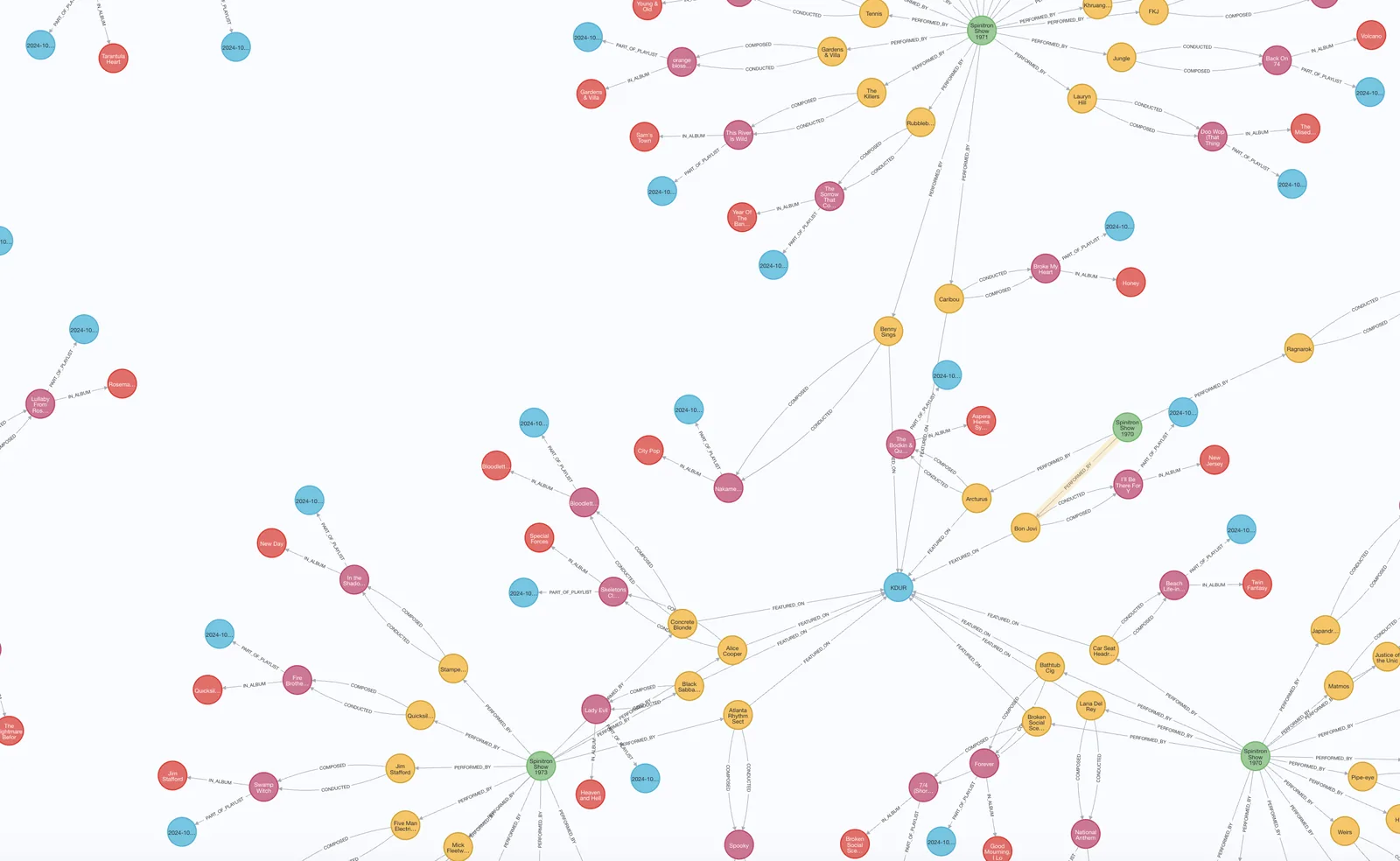
- Built an embedding-based artist-name resolution prototype and explored a graph representation in Neo4j.
- Prototyped natural-language-to-Cypher access for catalog questions.
- Documented and handed off the application when research priorities shifted to robotics.
Provenance & claim boundary
- More than 60 refers to the intended daily user population supplied by the station, not measured active users of a deployed application.
- The Power Apps system was handed off before deployment; the embedding and graph layers remained research prototypes.
Experimental design
- Requirements were informed by an intended population of more than 60 daily station users, but no production telemetry or adoption study was preserved.
- The project is therefore evaluated through application artifacts, data models, prototypes, and handoff evidence rather than user-impact metrics.
Results & evidence
Evidence
Application artifact
attachedPower Apps screens, data model, and project poster.
Data work
attachedCatalog-processing scripts, CSV exports, embedding experiments, and graph prototype.
Stakeholder context
attachedDesigned with station workflows and an intended population of more than 60 daily users.
Status boundary
attachedHanded off pre-deployment; no active-user or production-impact claim.
Metrics
60+ daily
Handed off
Prototype
Community radio
Failure analysis
- The absence of deployment telemetry prevents claims about active users, reliability, or workflow impact.
- Embedding and natural-language graph-query prototypes were not validated as station services.
Limitations
- No production telemetry or adoption record was preserved because the application was handed off before deployment.
- Embedding and natural-language graph-query experiments were prototypes, not validated station services.
- The project should support a product/leadership narrative rather than displace stronger robotics evidence.
Lessons & tradeoffs
- Intended users and active users are different metrics.
- A clean handoff is a legitimate project outcome when priorities change, provided status remains explicit.
- Stakeholder work improved the ability to translate ambiguous needs into data structures and interfaces.
Next questions
- What deployment and telemetry plan would allow station adoption and data-quality improvements to be measured?
- Can entity-resolution accuracy be evaluated against a labeled catalog before adding a natural-language query layer?