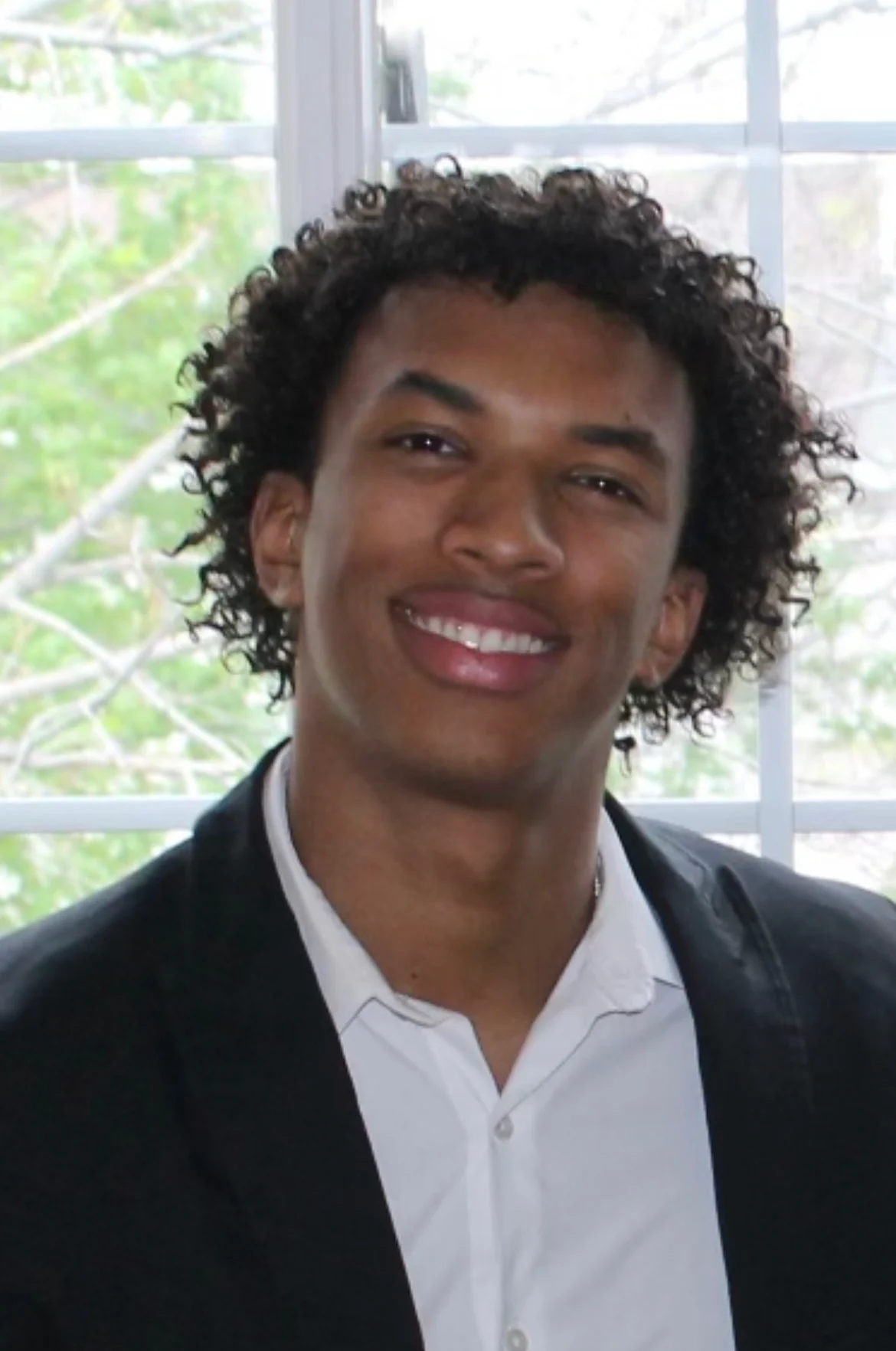
About Jangara
I'm a computer engineering student at Fort Lewis College, with minors in mathematics and business administration. My current research centers on humanoid navigation and robot learning. Under Dr. Yiyan Li, I integrated the Booster K1 into the VLN-CE-Isaac / NaVILA evaluation stack and completed all 1,077 R2R val-unseen episodes. The result — 18.3% success and 30.3% oracle success — became more useful after I decomposed it: 129 episodes reached the goal region but did not stop, separating arrival recognition from the larger exploration problem. I am now using controlled viewpoint experiments to study how a shorter embodiment changes the images and decisions seen by a navigation model.
Alongside that work, I built xembench, a ManiSkill3 benchmark for language-grounded manipulation across a Franka-style arm and a Unitree G1 upper body. Its completed baseline campaign includes 1,202 demonstrations and a 6,550-episode evaluation matrix. The first result was mostly negative: zero-shot transfer was near zero because the native precision-manipulation policies were themselves weak. A follow-up intervention showed where progress was possible — action chunking raised tool-pulling success from 1.3% to 14.7%, while grasp-critical tasks remained near zero. That boundary is the point of the benchmark: make failure measurable before calling it transfer.
Earlier projects gave me the rest of the stack. I led integration for a four-person, 18-DoF hexapod team that fielded a robot at the NASA Colorado Robotics Challenge; implemented LiDAR point-cloud algorithms for a five-person debris-analysis project; restored legacy Sawyer and Baxter robots; and built a KUKA kinematics library with analytic, finite-difference, and URDF cross-checks. Embedded and FPGA coursework keeps the hardware layer concrete rather than abstract.
The research question I want to pursue is how autonomous robots generalize and continue improving after deployment: how embodiment, viewpoint, action representation, data selection, and closed-loop feedback interact outside a curated training distribution. After a master's, I want to work as a robot learning engineer or research engineer building general-purpose autonomous systems. I value research that survives contact with a real platform and engineering that produces conclusions, not only demos.
Research questions
Generalization & Adaptation
How can a robot remain capable when its environment, task, viewpoint, or embodiment differs from training?
I am interested in identifying which parts of a learned system fail under distribution shift, then designing representations, data, and evaluations that make adaptation measurable.
Robot Learning & Learning-Based Control
How can robots acquire robust physical skills from demonstrations, interaction, and closed-loop feedback?
My current work uses behavior cloning and reinforcement-learning tools, while treating policy class, action representation, and native competence as experimental variables rather than fixed identities.
Embodied Autonomy
How should perception, language, planning, learning, and control be integrated into one autonomous physical system?
I care about complete-system behavior: what the robot observes, how decisions become motion, and what deployment evidence can actually establish.
Education
Fort Lewis College
Computer Engineering · Minors in Mathematics & Business Administration
B.S. expected May 2027
GPA 3.65 (cumulative through Summer 2026; 4.0 in Spring and Summer 2026, Spring Dean's List) · 3.8 upper-division
Builder ethos
- Deployment realism — a simulator result, a hardware test, and a closed-loop hardware evaluation are three different claims.
- Evaluation discipline — preserve per-episode data, define denominators, report negative results, and state what the experiment cannot establish.
- Full-stack range — comfortable moving between learned policies, benchmark harnesses, ROS and SDK interfaces, control logic, firmware, and electronics.
- Provenance — identify team roles, upstream frameworks, course context, and AI-assisted implementation instead of implying sole authorship.
Honors & awards
- 2nd place — Physics & Engineering Symposium, Fort Lewis College (robotic PV hotspot inspection), Sep 2025
- Dean's List — Spring 2026, 4.0 semester GPA
- Katz School of Business Leadership Award — Apr 2024
- New Registered Student Organization of the Year — Entrepreneurial Ventures Association, 2023–24
- Goldman Sachs Emerging Leaders Series — Feb 2024
Leadership & service
- Student representative, Strategic Implementation Committee — one of four students serving with the FLC president, trustees, deans, and campus leaders on the 2025–2030 strategic plan
- President & co-founder, Entrepreneurial Ventures Association — led an 8-person executive team, organized pitch competitions allocating $1,500 in micro-grants, and brought the NASA Venture Program to campus
- Team lead, NASA Colorado Robotics Challenge — coordinated a four-person team building and fielding an autonomous 18-DoF hexapod
- STEM tutor — mathematics, physics, and programming
- Volunteer, Children's Cancer Research Fund — six years supporting a memorial golf tournament that has raised more than $175,000
Values
- Evidence before narrative
- Separate a demo from an evaluation
- Treat deployment as an experimental discipline
- Credit teams, upstream work, and tools precisely
- Build across interfaces without hiding their failure modes